
Published on
Custom Zipper Pouches, Flat Pouches and Liquid Packaging Pouches: How Your Pack Opens
Ask a buyer what pouch they want and they usually describe a shape: stands up, lies flat, has a gusset. Ask the person using it and they describe something else. It was hard to open. It would not close again. It dripped when they poured. That second set of complaints all comes down to the closure.
At Transcontinental Packaging, our flexible packaging pouches close in one of three ways: a plain heat seal, a resealable zipper or a spout fitment. This guide works through which one fits your product, starting with the simplest.
Flat pouches: the simplest pack that works
A flat pouch, also called a three-side-seal pouch, is two layers of film sealed on three sides, filled through the fourth and then sealed shut. It has no base and no gusset, so it lies flat in a carton and uses less film than a pouch built to stand.
Flat pouches suit products that get used up in one go or that do not need to look good standing on a shelf:
- Single portions and samples, where the pack is opened once and thrown away.
- Spices, seasonings and dry mixes sold on a peg, using a hang hole.
- Ingredients going to a kitchen or a production line, where nobody sees the pack.
- Inner packs that go inside a printed carton or a larger bag.
A tear notch is usually all the opening a flat pouch needs. If the product is used across several days, though, a heat seal alone means the customer ends up with a clip, an elastic band or a jar. That is where a zipper comes in.
Custom flat pouches: what you can change
Being simple does not mean a flat pouch has to look plain. Custom flat pouches are made to your size and printed multi-colour to your artwork, and most of the extras on a stand-up pouch work on a flat one too:
| Option | Choices | Worth knowing |
|---|---|---|
| Size | Made to your fill weight and product | Measure with the real product, not just the weight, since a light, bulky fill needs more room |
| Film structure | Laminated, specified to the product and shelf life | This is where barrier against moisture and oxygen is decided |
| Finish | Gloss, matt or soft-touch | Matt and soft-touch hide scuffs better in a mixed carton |
| Extras | Tear notch, hang hole, window | A window has to be planned into the artwork at the start |
| Closure | Heat seal or zipper | A zipper turns a single-use pack into one the customer can reseal |
Custom zipper pouches: when resealing earns its place
A zipper adds cost and a little extra film above the seal, so it should be there for a reason. The test is simple: will your customer open this pack more than once? If they will, a zipper keeps the product fresh between uses and stops it spilling in the cupboard. Coffee, snacks, pet treats, dried fruit and nuts, and powders measured out one scoop at a time are the usual cases.
Custom zipper pouches come in most formats. A stand-up pouch with a zipper is the familiar shelf pack, but a flat pouch or a gusseted pouch can take one too. On most zipper packs, the zipper sits just below the top seal. The customer tears off the top along the notch, and from then on opens and closes the zipper. Until that first tear, the pack stays sealed, so it is plain to see if it has been opened.
A few things to settle before you order:
- How full the pouch is. A pouch packed to the brim is hard to reclose, so leave some room above the product for the zipper.
- What the product is like. Fine powders can get into the zipper track. Tell us what you are packing so the zipper is placed and specified with that in mind.
- Whether it needs to stand. If it needs shelf presence, start from a stand-up or gusseted pouch and add the zipper. Our guide to gusseted pouches covers the shapes.
- Valve or no valve. Freshly roasted coffee gives off gas, so coffee pouches usually pair the zipper with a degassing valve.
Liquid packaging pouches: what a spout has to do
Liquids are the hardest job a pouch gets. A dry product that finds a weak seal leaks a few crumbs. A liquid leaks everywhere. That is why liquid packaging pouches are usually spouted pouches: a fitted spout and cap gives the customer a controlled pour and a closure that holds when the pouch is lying on its side.
Spouted pouches are not only for liquids. Sauces, purées and pourable powders use them too, anywhere a customer wants to pour or squeeze rather than scoop. Three things matter more on a spouted pouch than on a dry pack:
- The film next to the product. Oily, acidic or alcohol-based liquids can attack some inner layers, so the laminate is chosen for what is actually inside.
- Seal strength. A full liquid pouch puts pressure on every seal when it is dropped, stacked or squeezed in a delivery box. Ask for samples and test them with your own product.
- How you fill. Some lines fill through the spout and some fill before the spout is sealed in. Tell us how your filling works before the pouch is specified.
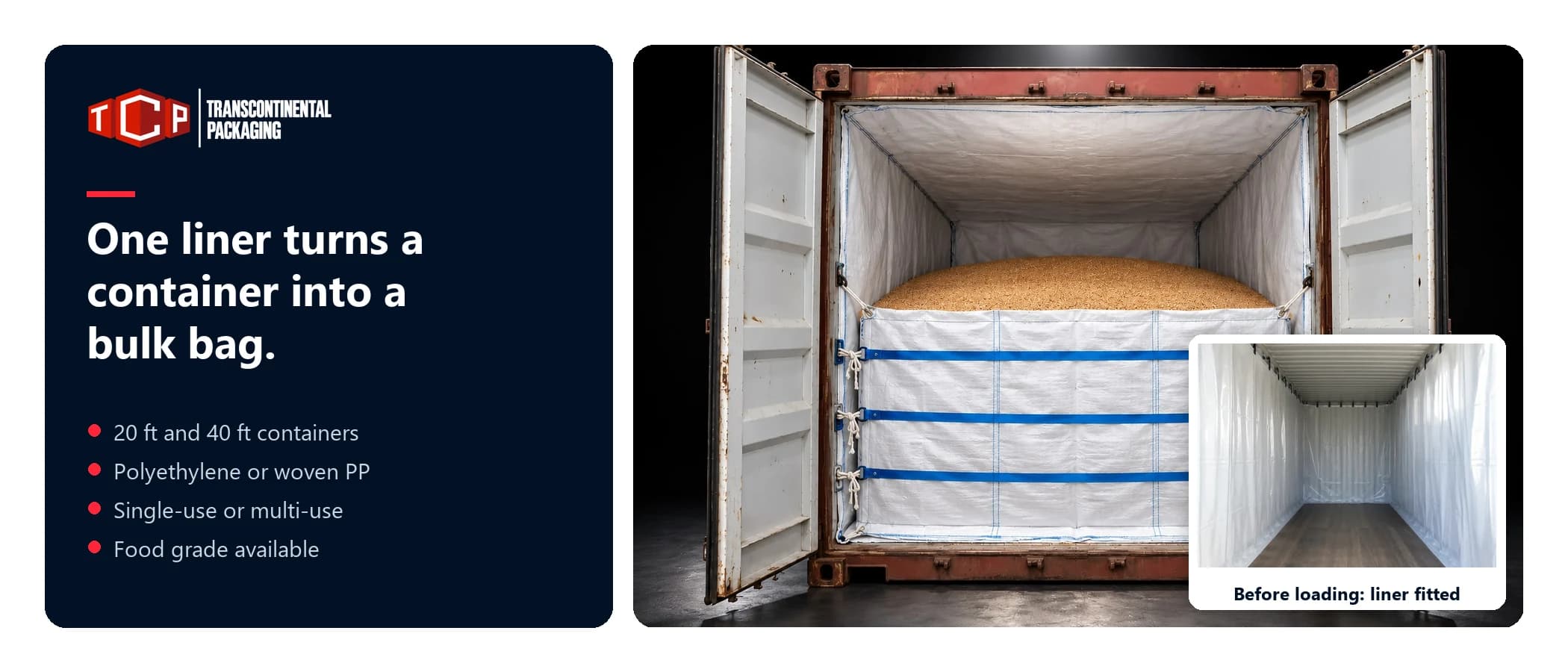
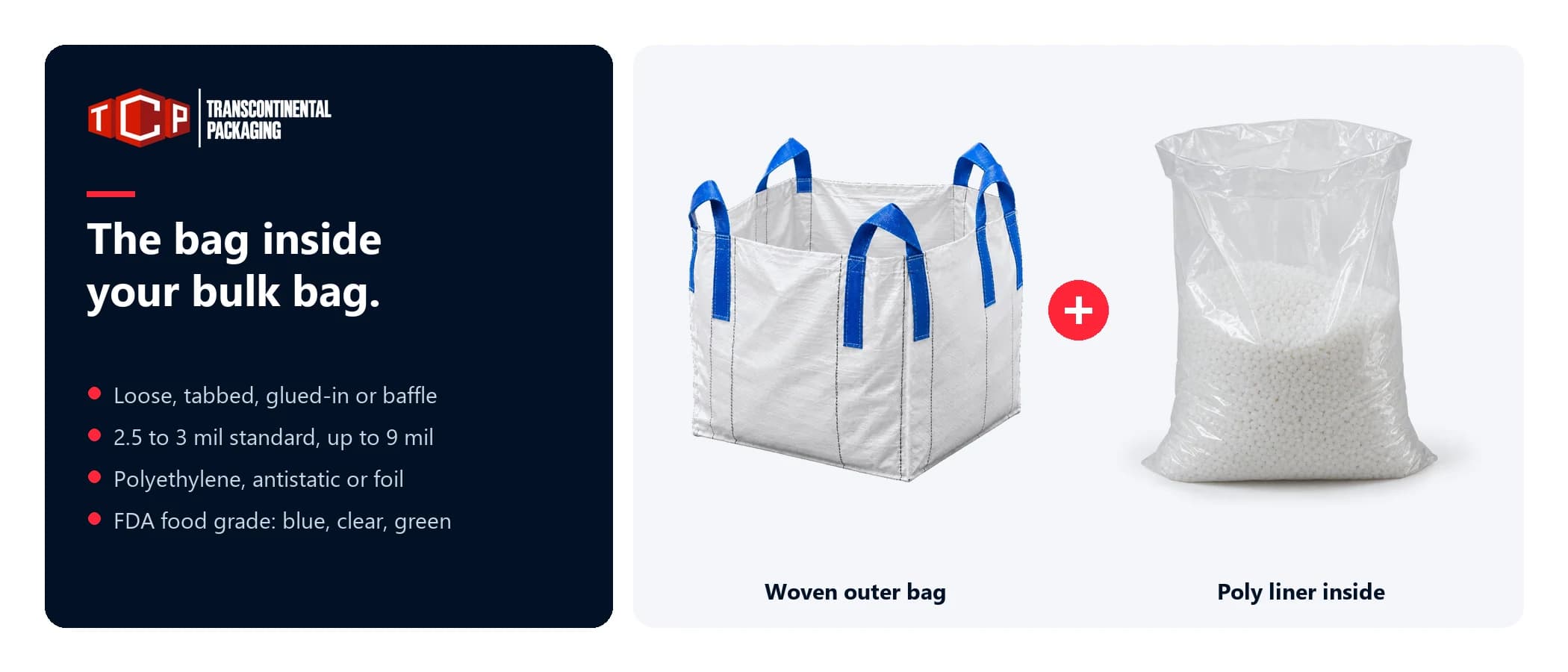
If the liquid goes into your plant in bulk first, our container liners and FIBC liners cover that end of the journey.
Choosing a closure at a glance
| Your product is | Closure to start with | Typical format |
|---|---|---|
| Used once, or opened and emptied | Heat seal with a tear notch | Flat pouch |
| Used a little at a time, dry | Zipper | Stand-up, gusseted or flat pouch with zipper |
| Freshly roasted coffee | Zipper with a degassing valve | Stand-up or gusseted pouch |
| Liquid, sauce or purée | Spout and cap | Spouted pouch |
| Sensitive to oxygen and moisture | Heat seal on a barrier film | Vacuum pouch |
What to send with your enquiry
Pouches are built around the product, so there is no single price list. These details get you an accurate quote fastest:
- What you are packing, and how much goes in each pouch.
- How the customer uses it: once, a bit at a time, or poured.
- The format and closure you have in mind, if you have one.
- How long it needs to last on the shelf.
- Your artwork, or a sample of a pouch you already sell that you want matched.
- How you fill: by hand, on a filling line, or through the spout.
Send them through our quote form, or get in touch if you would rather talk it through first. If you are planning repeat orders of custom stand up pouches, our guide to wholesale stand up pouch programs explains how to set one up.
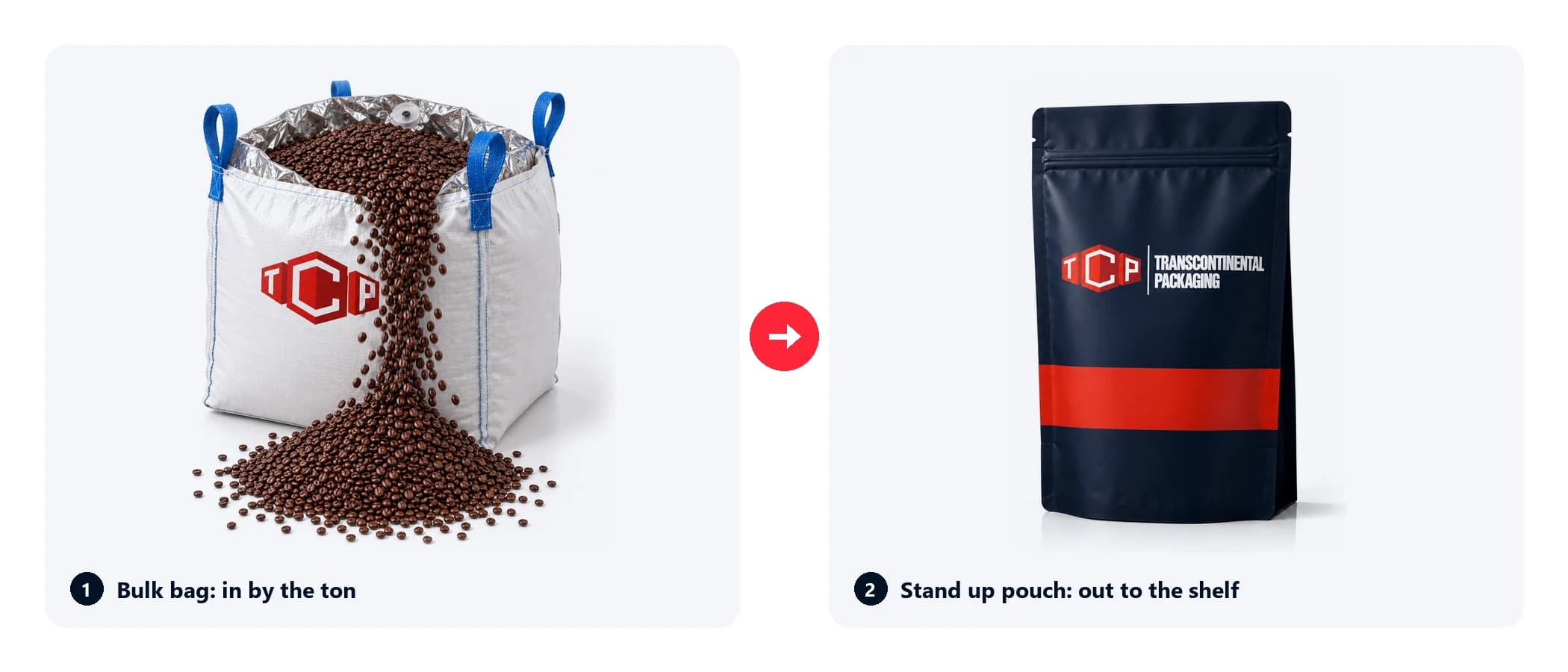
Related pages: flexible pouches, roll stock film for your own form-fill-seal line, pouches for coffee and tea, food service, ingredients and pharmaceutical packing, and our guide to moving from bulk bags to stand up pouches. You can also browse our full product range or go back to the Transcontinental Packaging homepage.
Explore our packaging product range or visit the Transcontinental Packaging homepage to learn about our company and the industries we serve.