


By construction
Four-Panel
Squarest profile, best cube
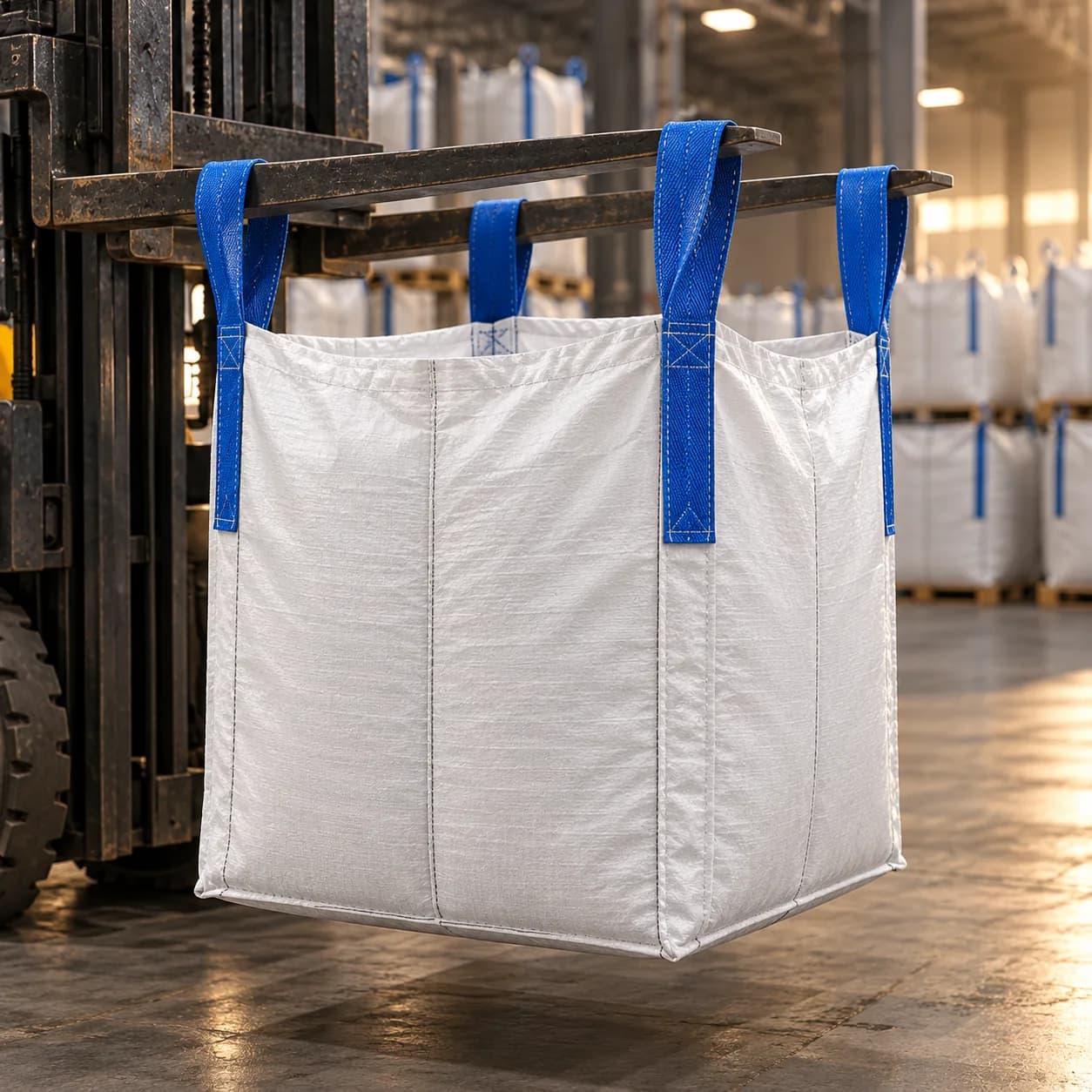
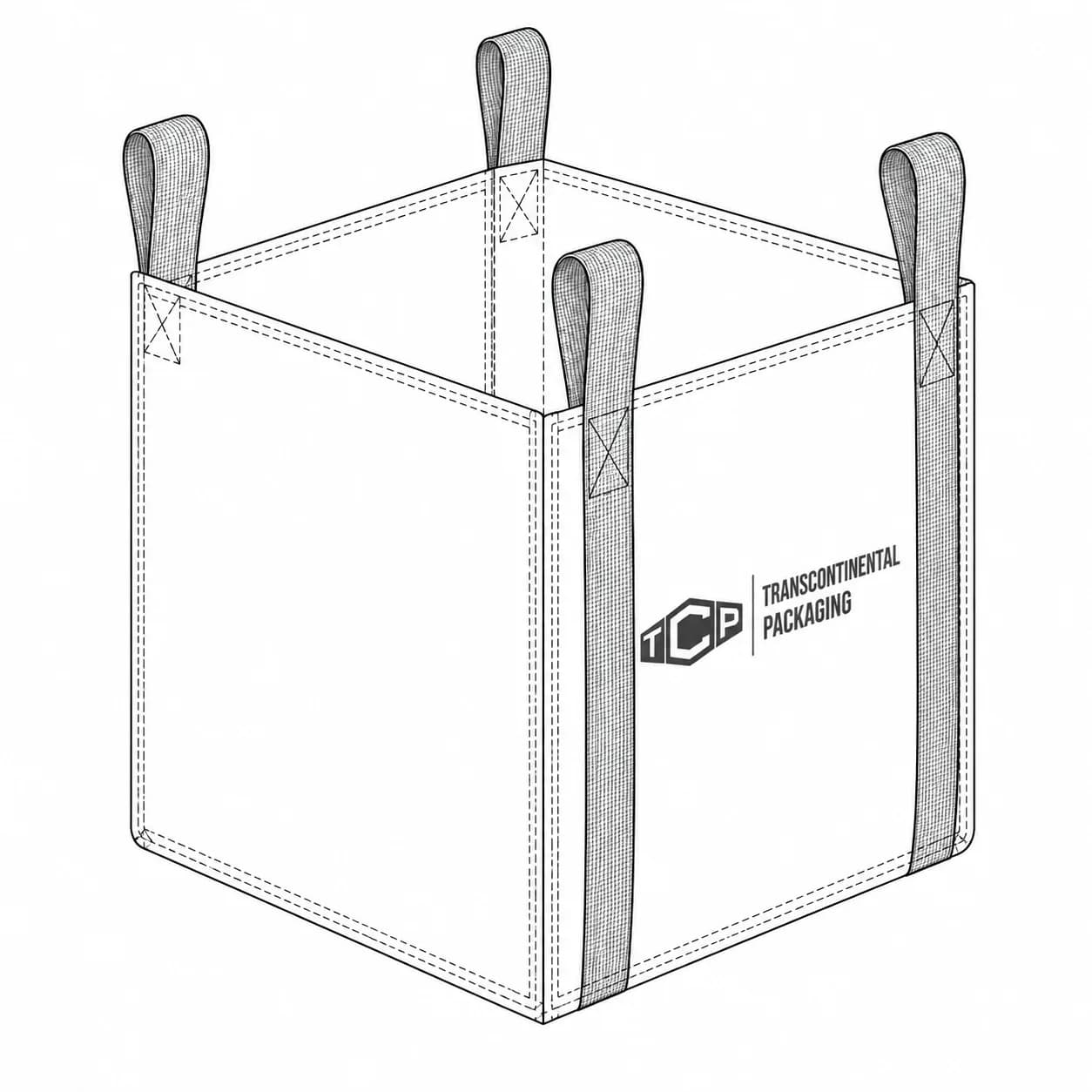
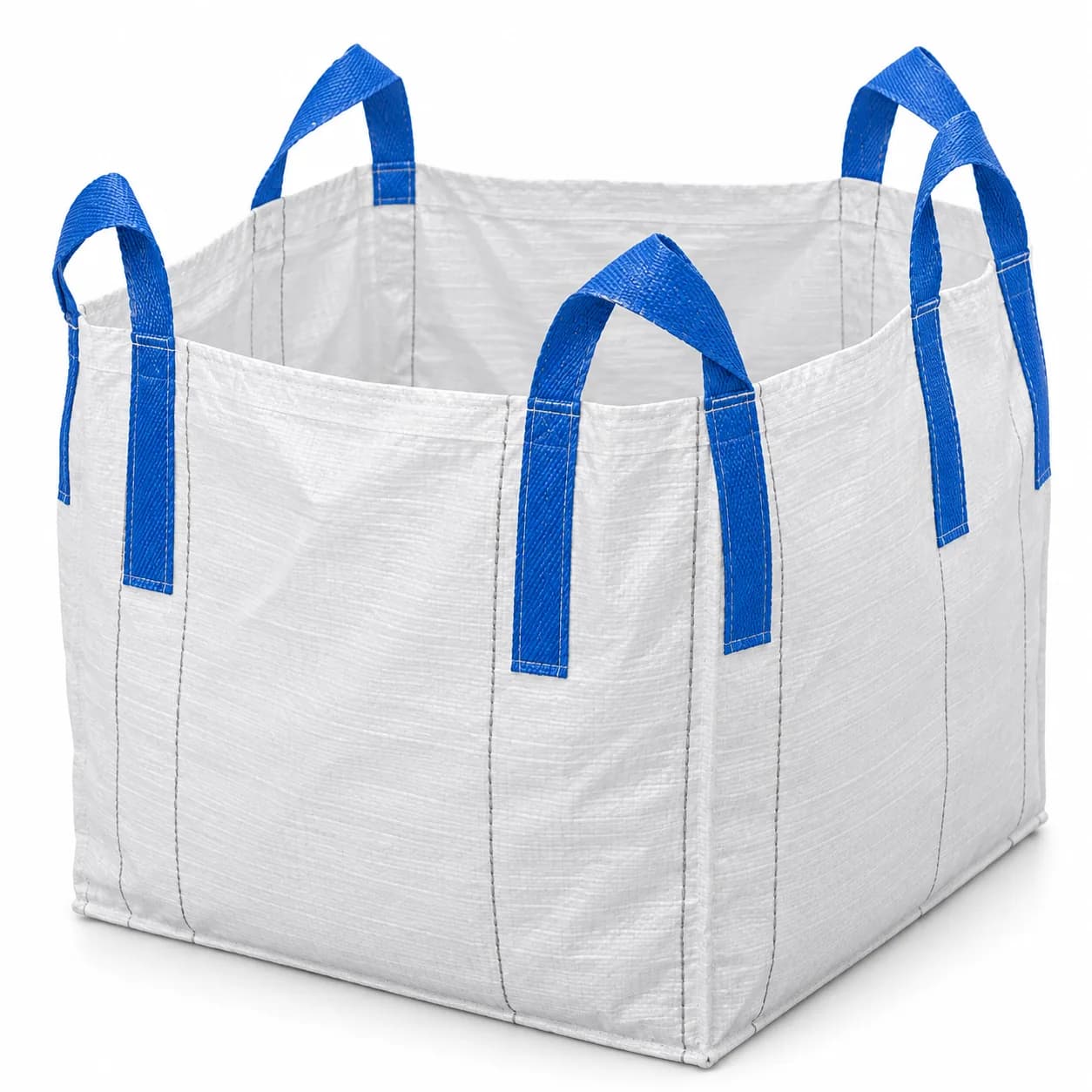
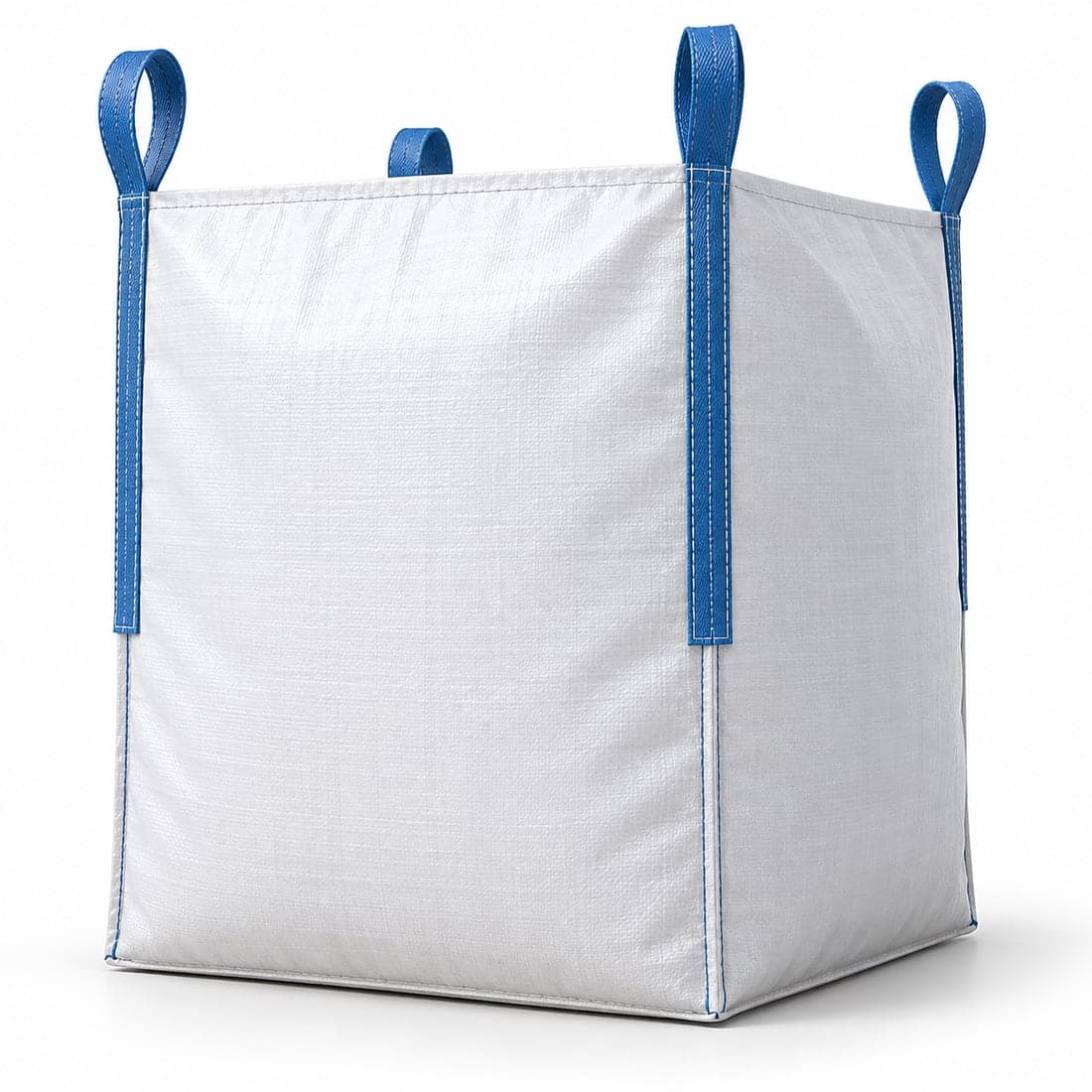
Four sewn panels holding a squarer profile, better cube efficiency for stacking and container loading.
Product description
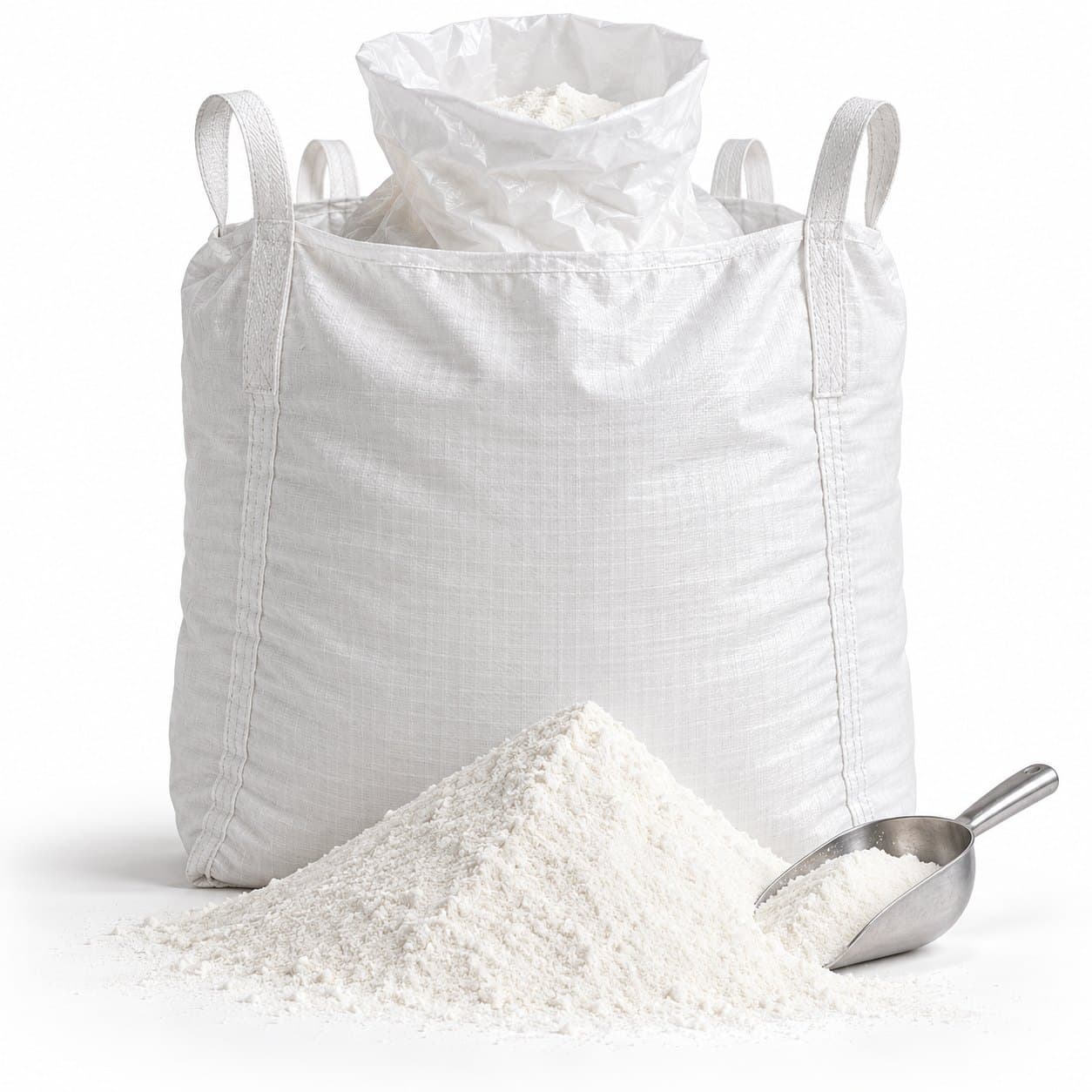
Four separate fabric panels are sewn together to form the body, giving four vertical seams. The extra structure holds a noticeably squarer profile than a U-panel when filled.
That cube efficiency is the reason to choose this bag. A bag that stays square palletizes more tightly, stacks more predictably and wastes less container volume. The trade-off is honest: more stitching means more potential leak paths for fine product, at the same rated load as the other constructions.
Uses
- Container loading where wasted volume costs money
- Warehouse racking and predictable stacking
- Operations palletizing bags for onward distribution
Industries we supply this for: Ingredients, Food Service, Chemical, Recycled Tire
Configurable options
Everything below is specified per order. Nothing here is a fixed catalogue number.
| Static type | A, B, C or D |
|---|---|
| Top | Open, duffle, flap, spout, conical spout |
| Bottom | Flat, spout, conical spout, full bottom discharge |
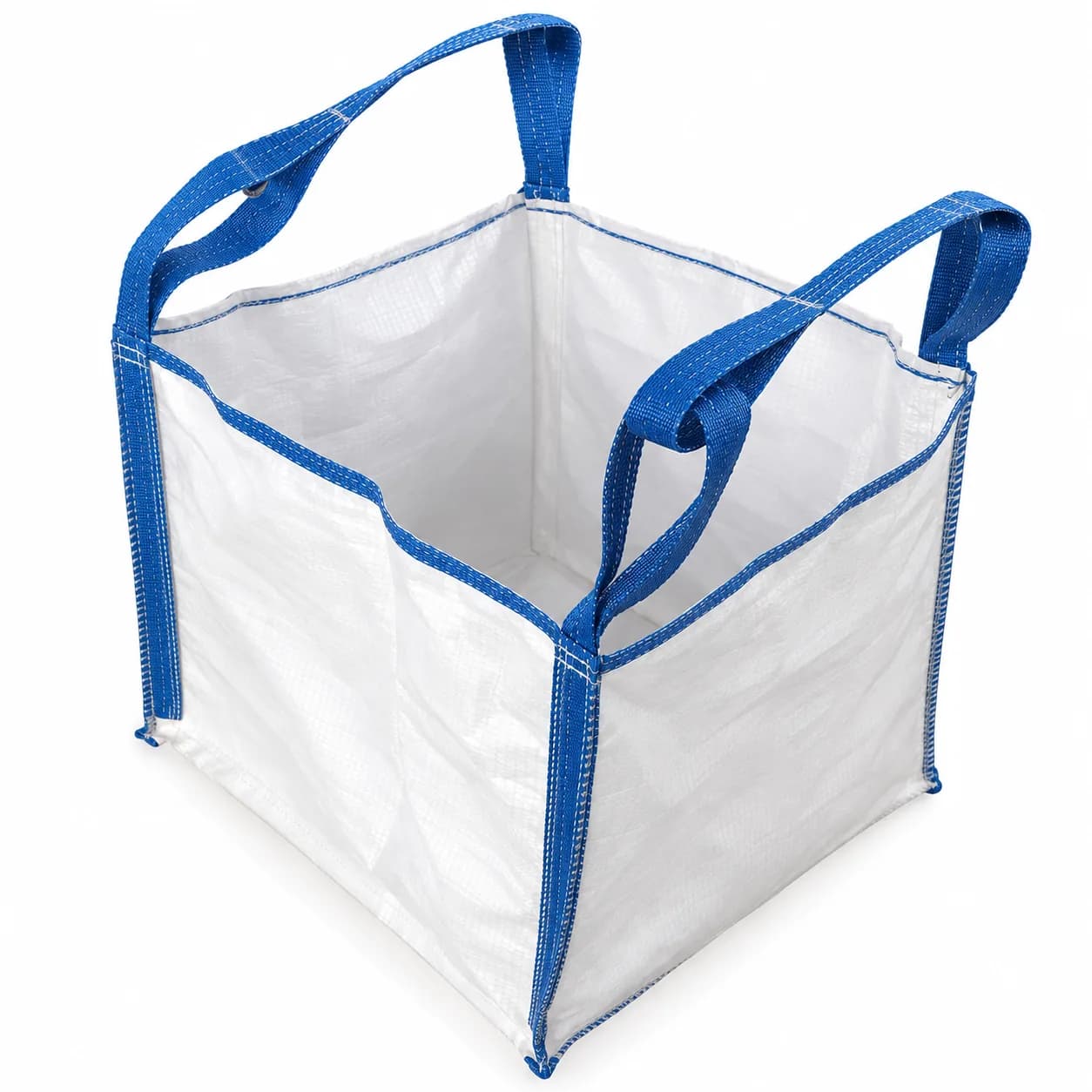
| Loops | Corner (four-point), cross corner, tunnel |
| Fabric | Coated or uncoated |
| Liner | None, loose, glued-in, antistatic, foil |
| Add-ons | Document pouch, sift-proof seams, custom print |
Customizable options
Every option below is available on this product. They change how the bag fills, lifts and empties.
Lift loops
Corner loops
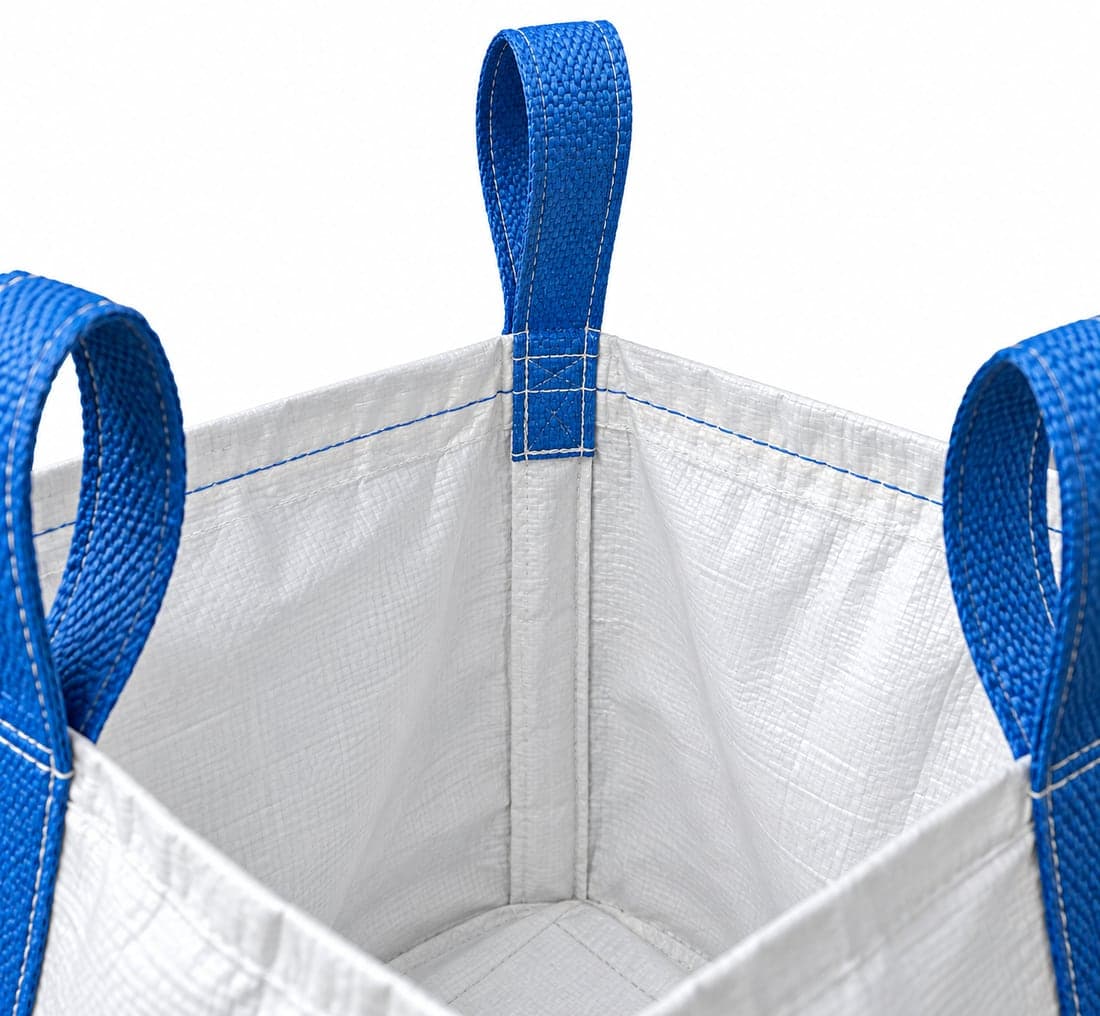
One loop sewn into each corner seam. The standard build, and the most affordable way to lift a bag.
Cross corner
Sewn into eight points across opposite corners, so the loops stand upright and the forklift operator is not fishing for four floppy straps.
Tunnel loops
A sleeve of body fabric spanning each side, corner to corner. The forks go straight through: the easiest pick where headroom is tight.
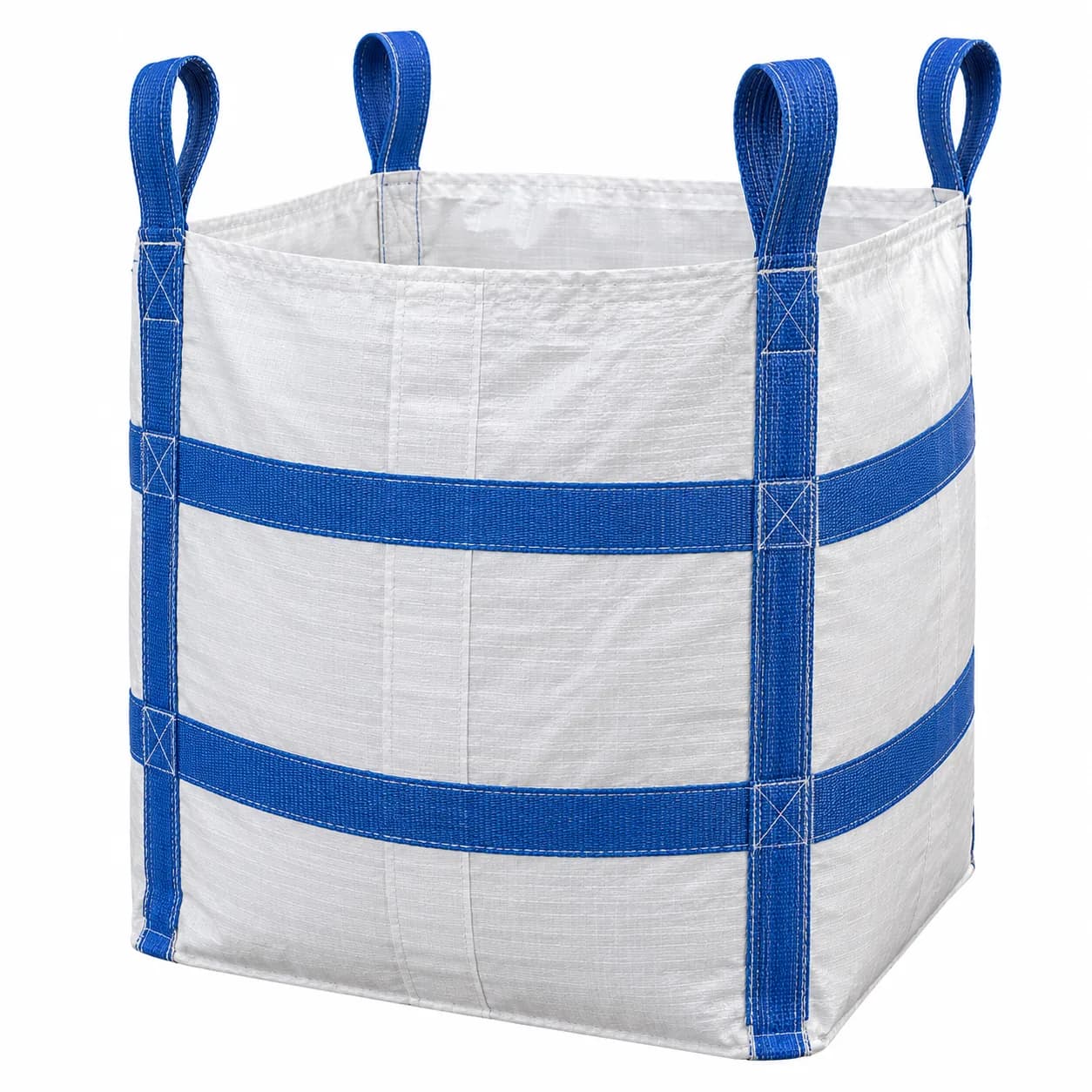
Stevedore straps
Double-layer straps across the corner loops, so the bag can be taken on one or two points instead of all four.
Double loops
Two lifting points instead of four, where that suits the load and the lift better.
Top
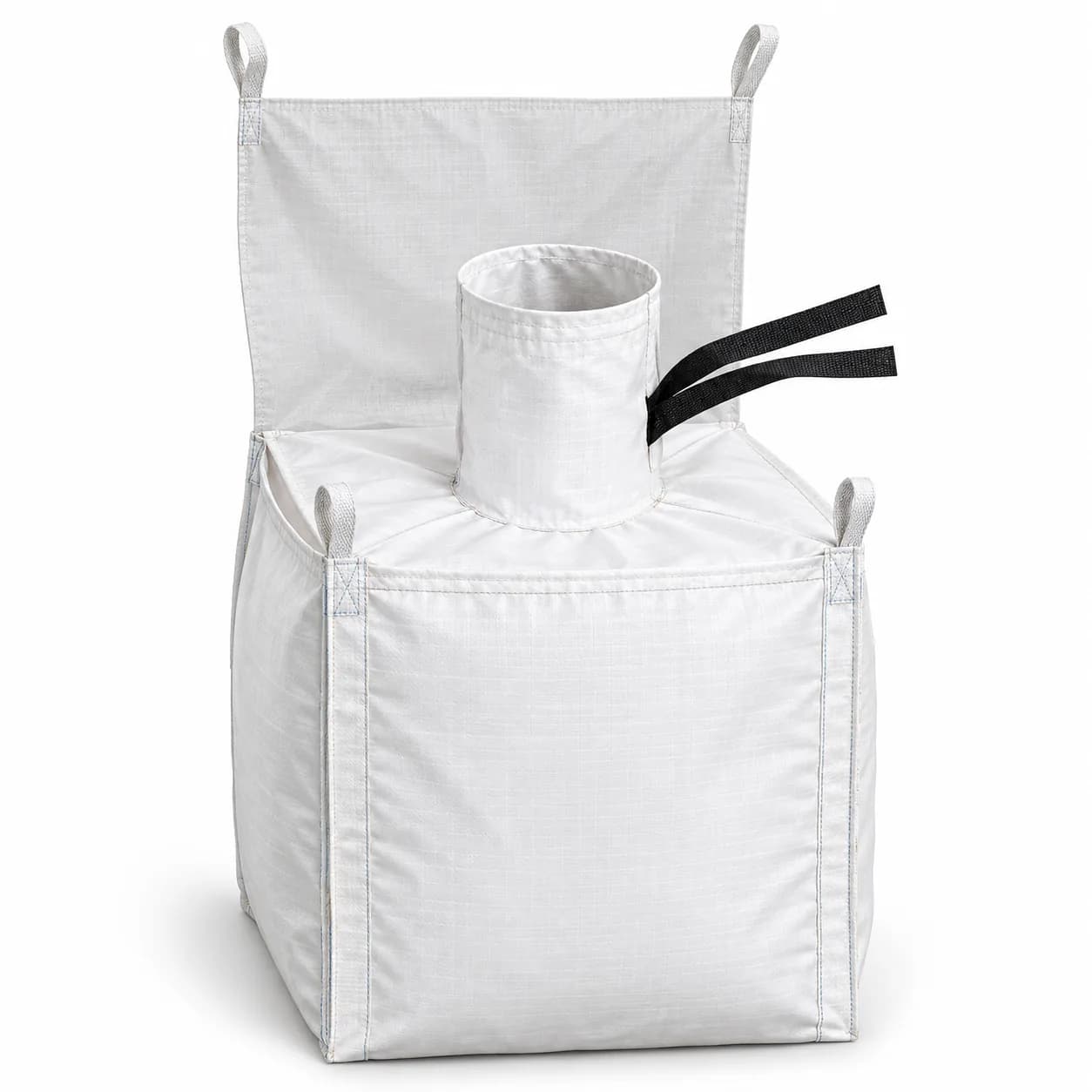
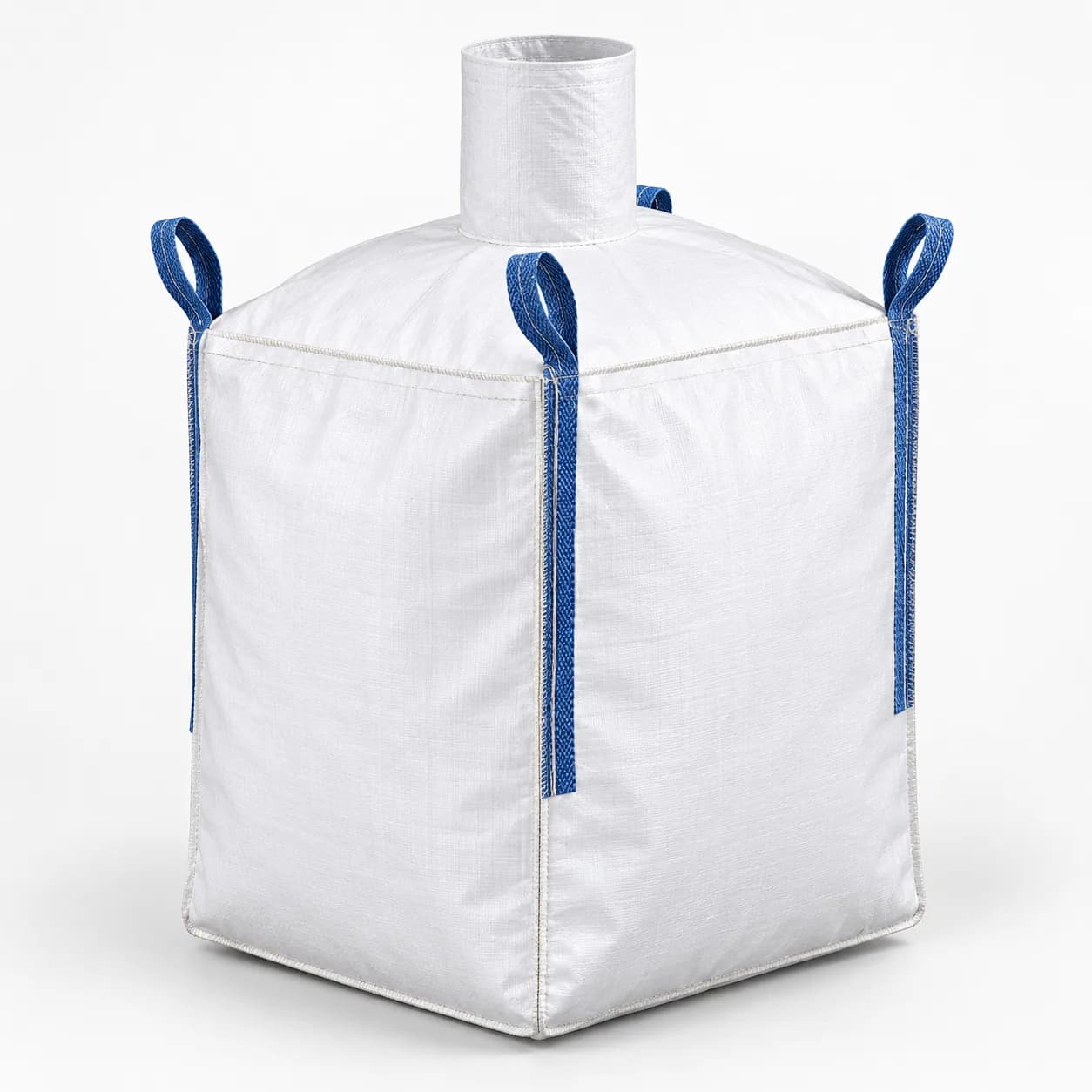
Spout top
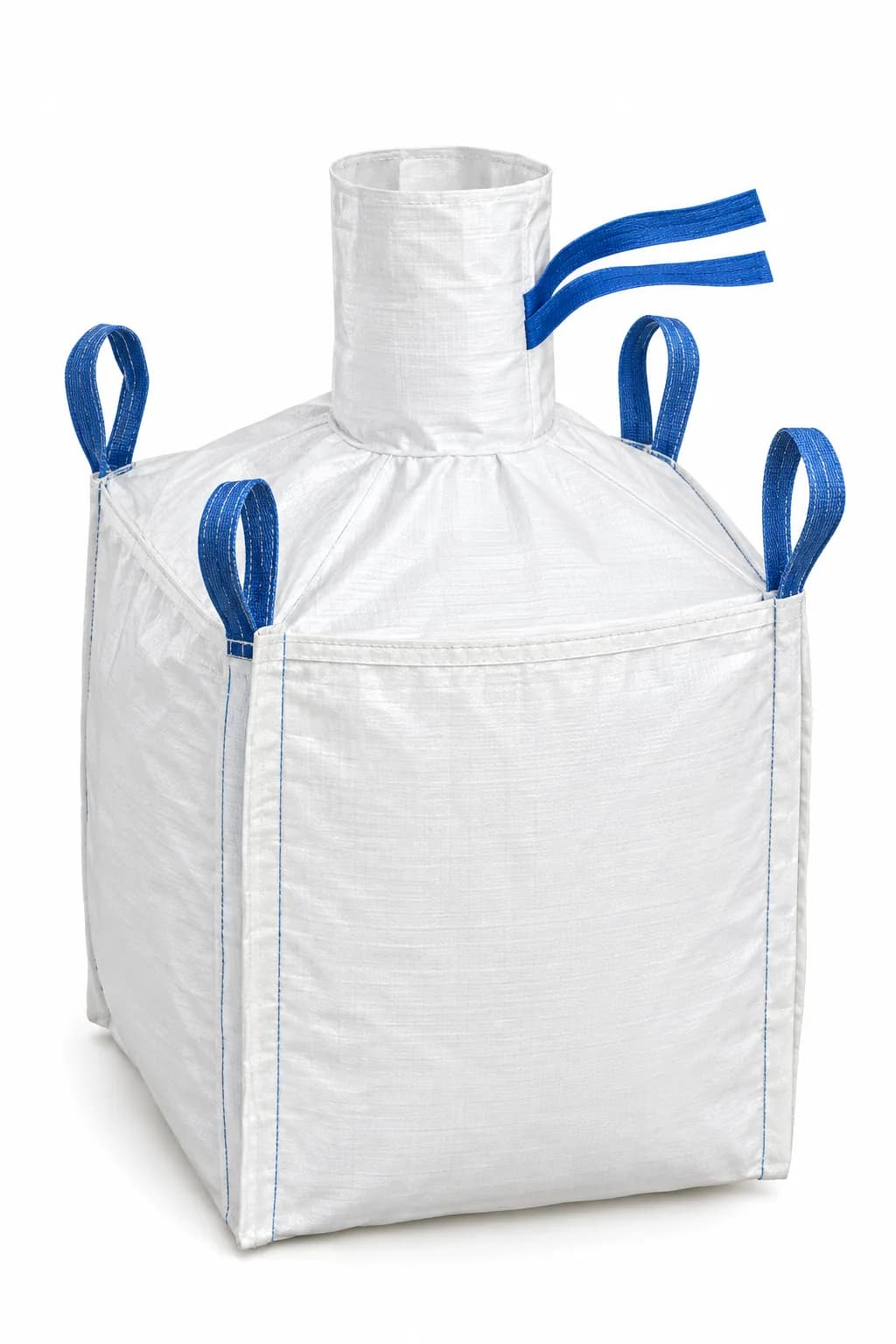
A cylindrical spout sewn into the top panel. 14 in diameter by 18 in long as standard, sized to your filling head.
Spout top with flap
A spout top with a flap panel over it, tied down so the spout stays covered in transit.
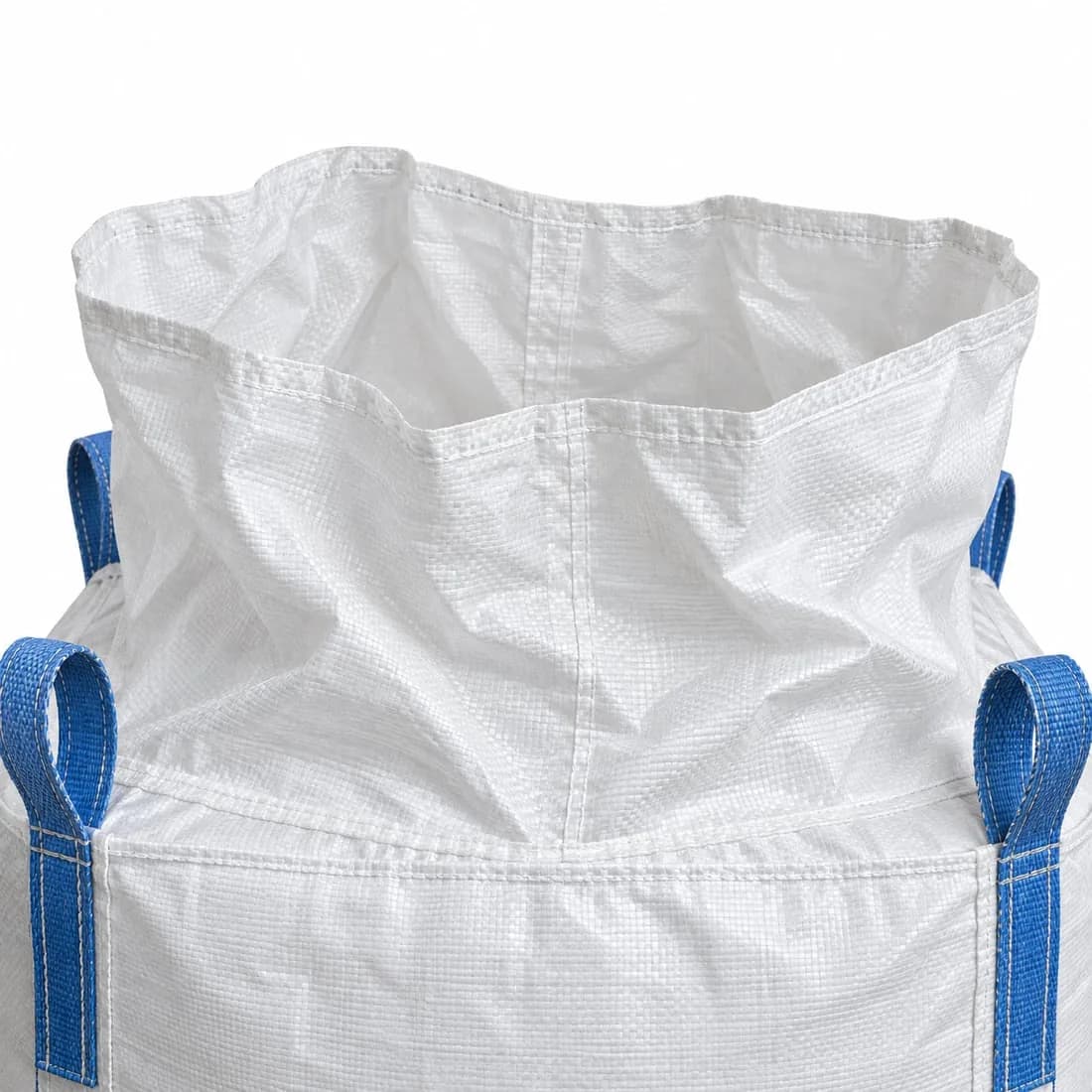
Duffle top
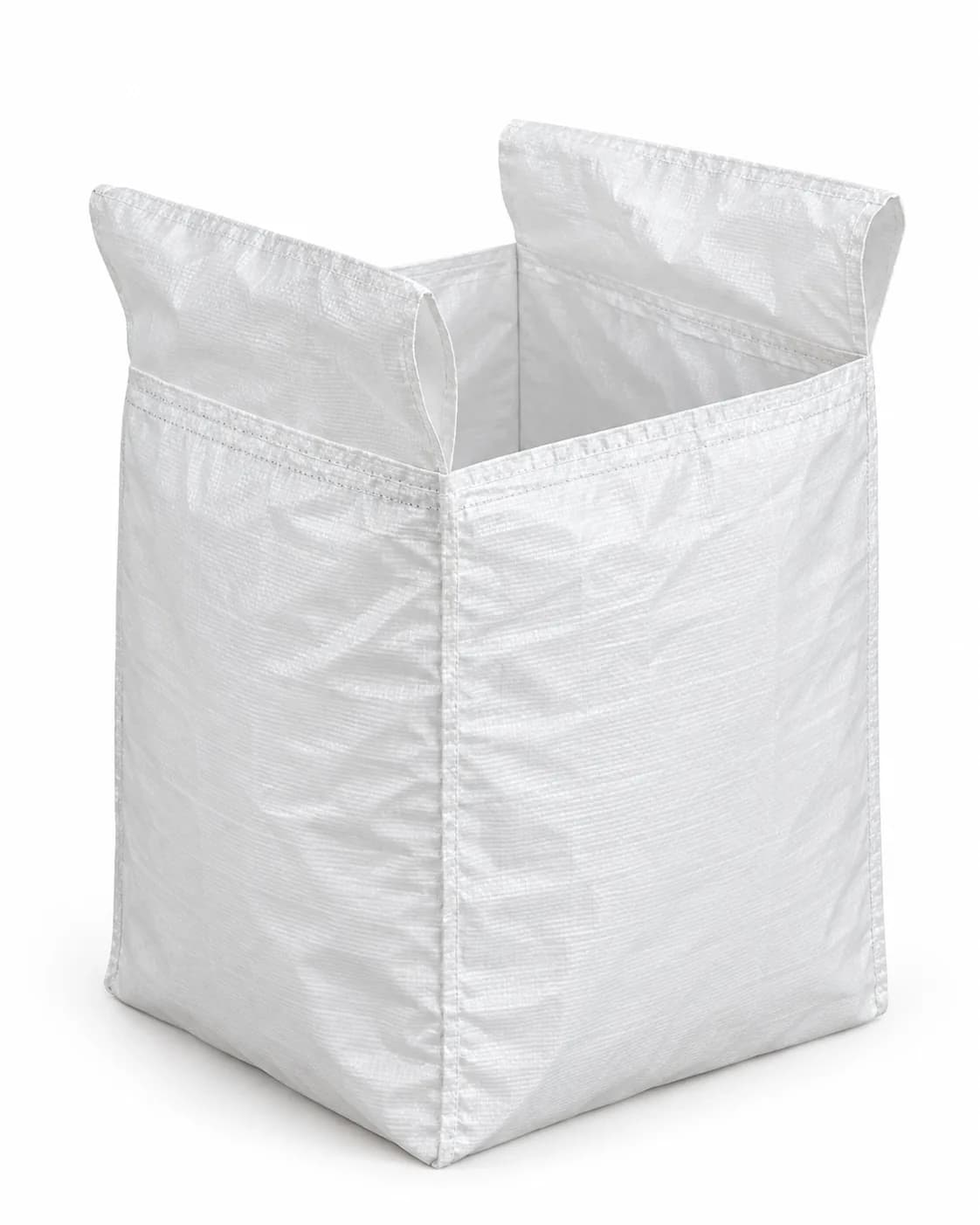
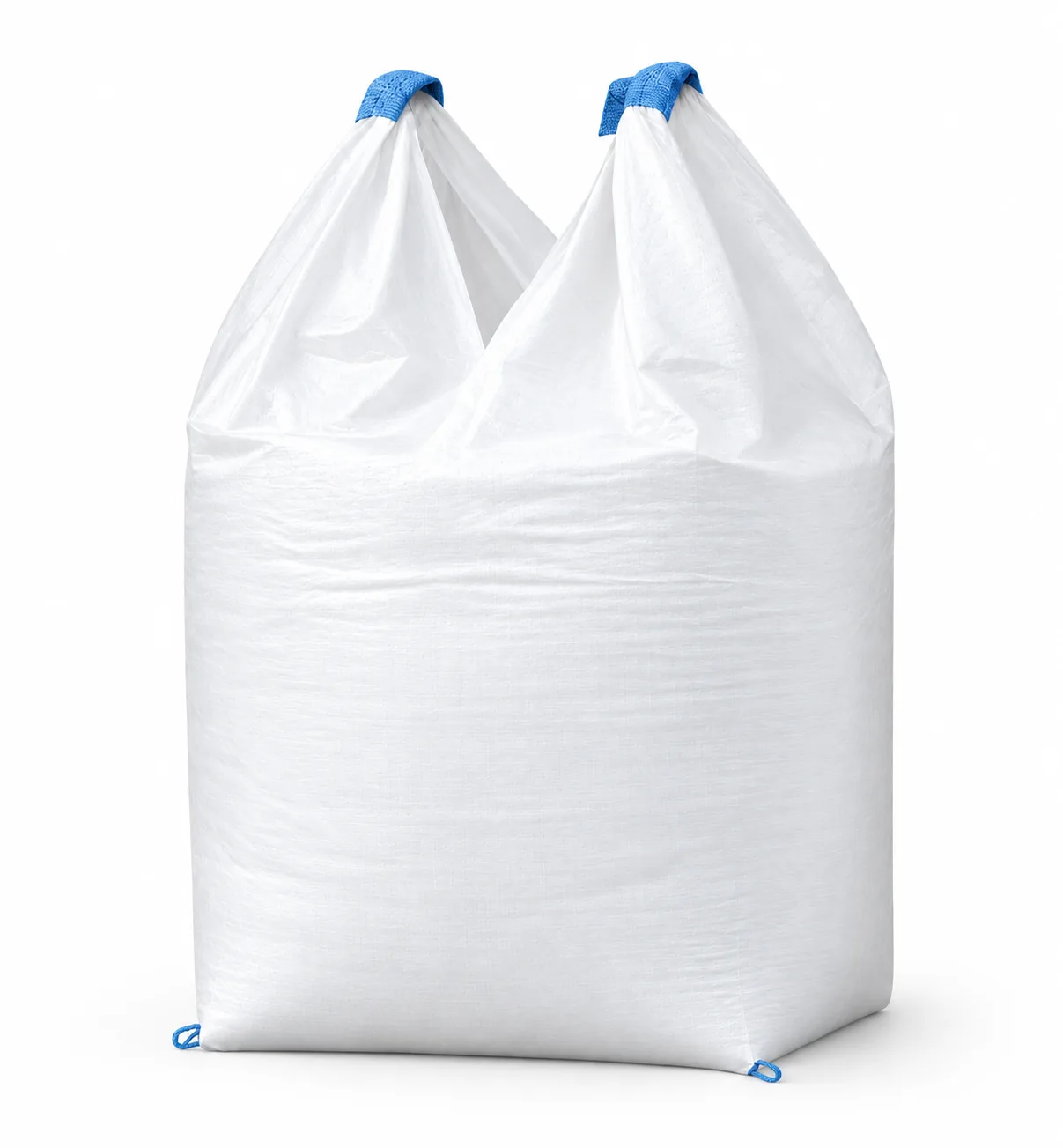
A skirt the full width and depth of the bag, so the top opens completely and ties closed.
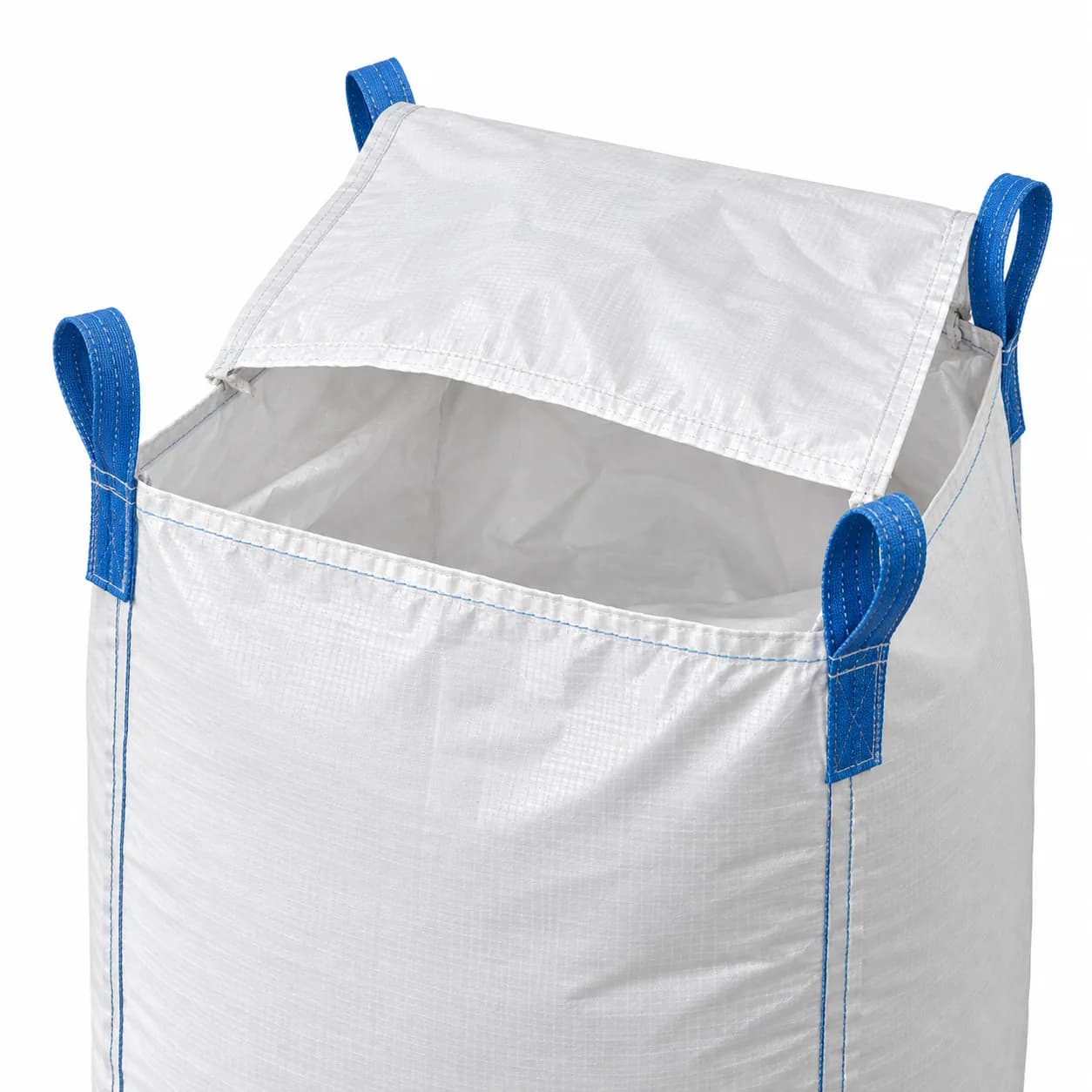
Flap top
A closed panel with a flap sewn along one seam, tied down over the mouth.
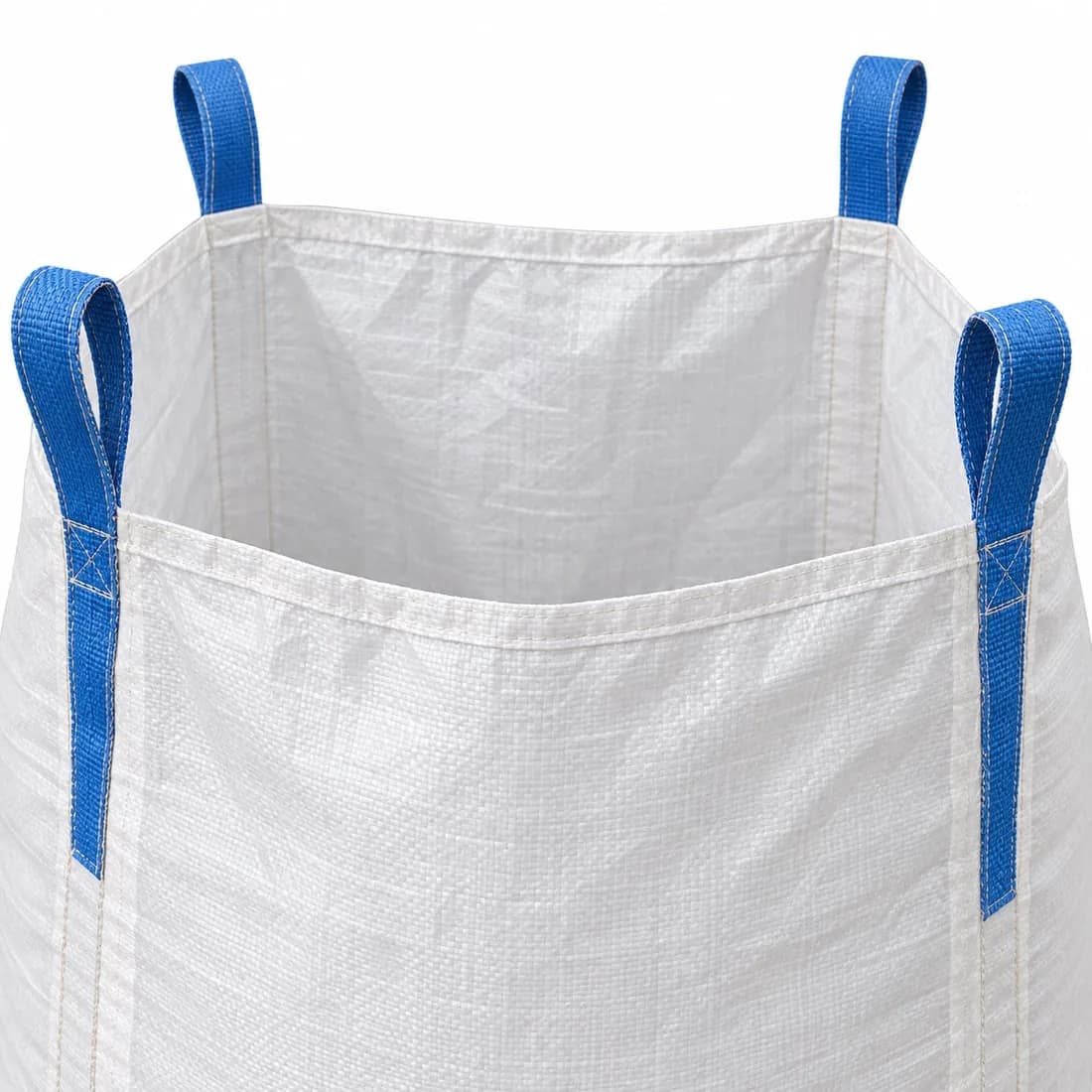
Open top
No panel at all. Fastest to fill where dust and weather are not a concern.
Conical spout top
A top panel that tapers up into the spout. Double spout tops are available too, specified to your filling equipment.
Bottom
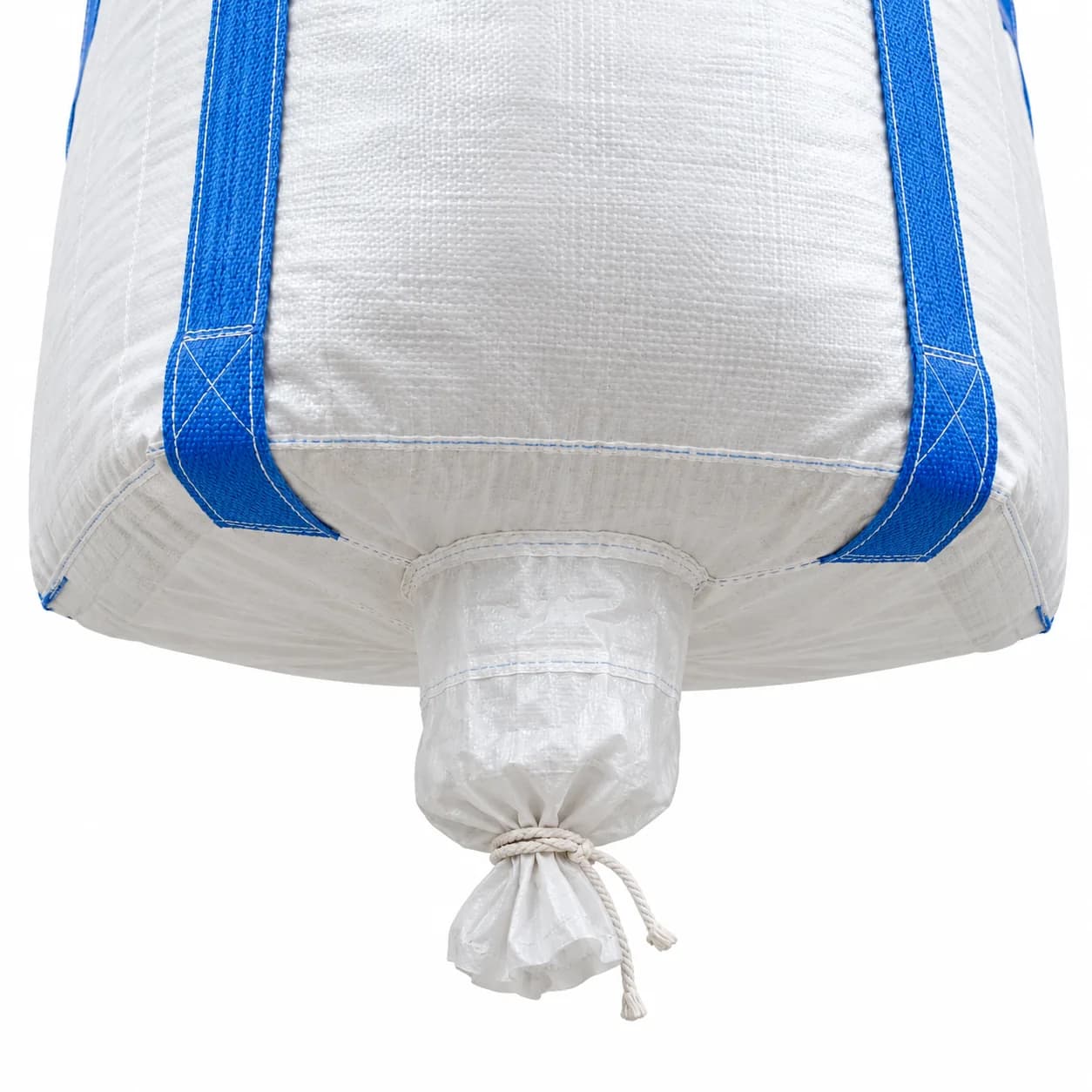
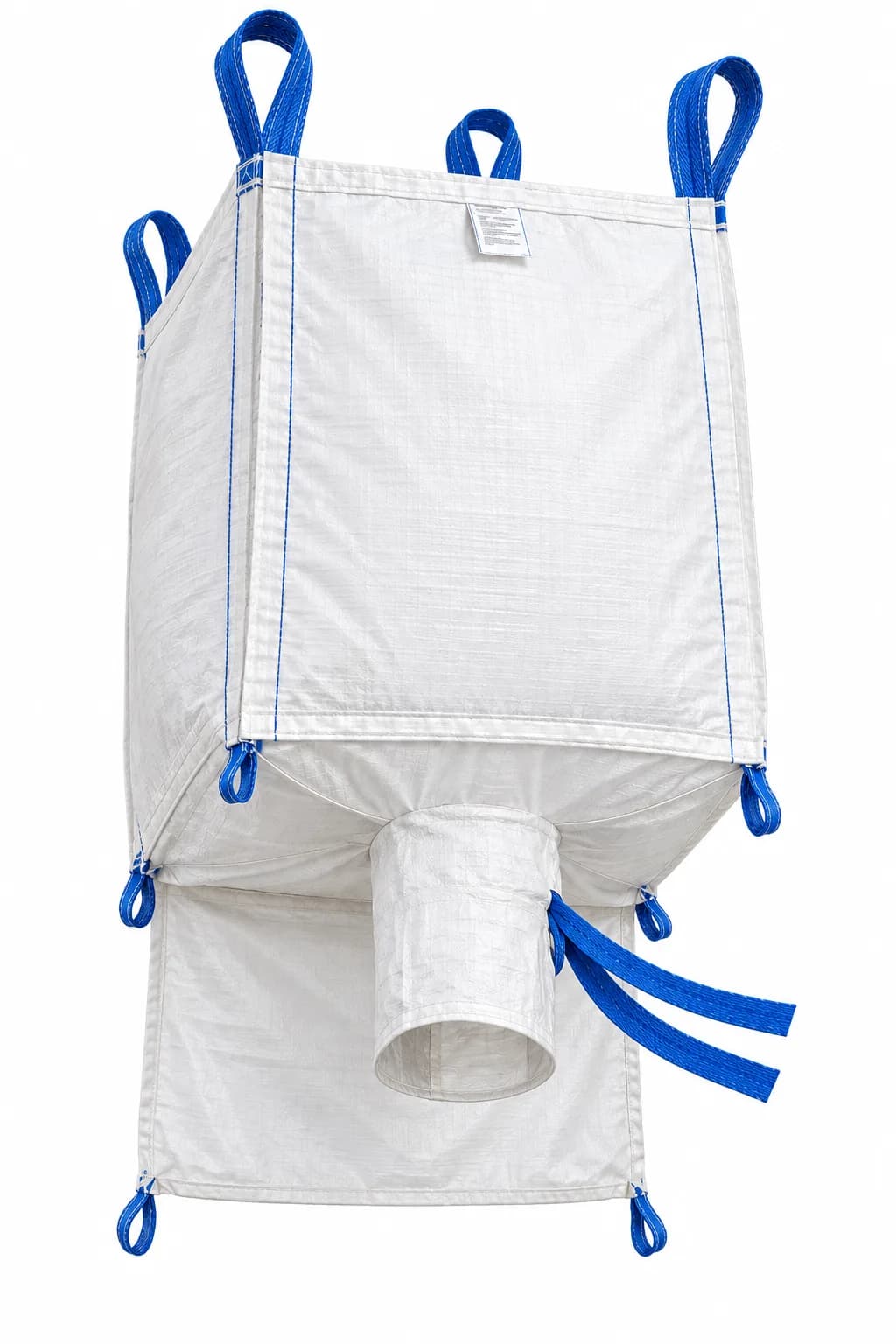
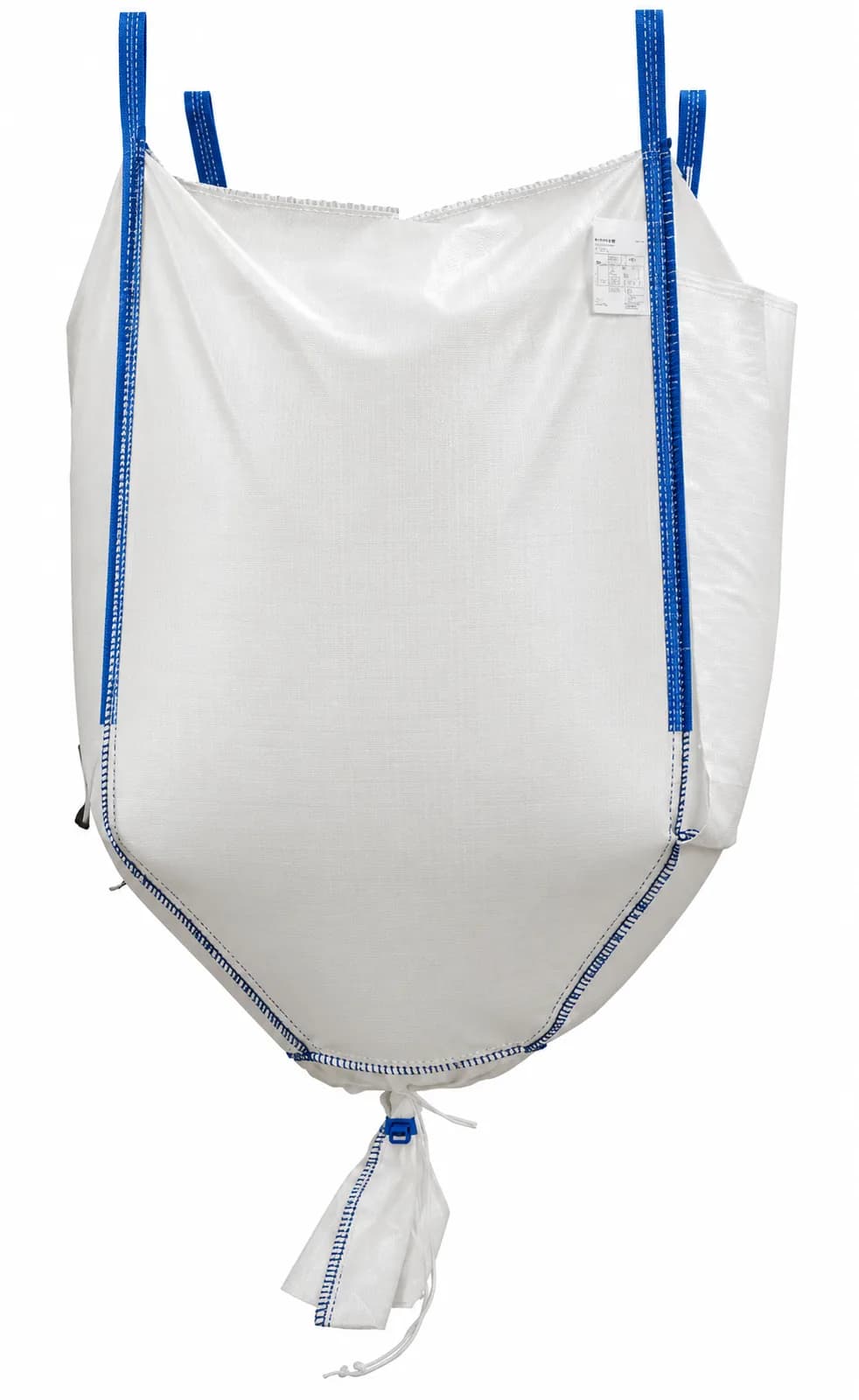
Discharge spout
The standard 14 by 18 in spout, tied off. A wider spout is worth specifying for material that bridges.
Flat bottom
Closed base for product that is emptied by tipping or cutting.
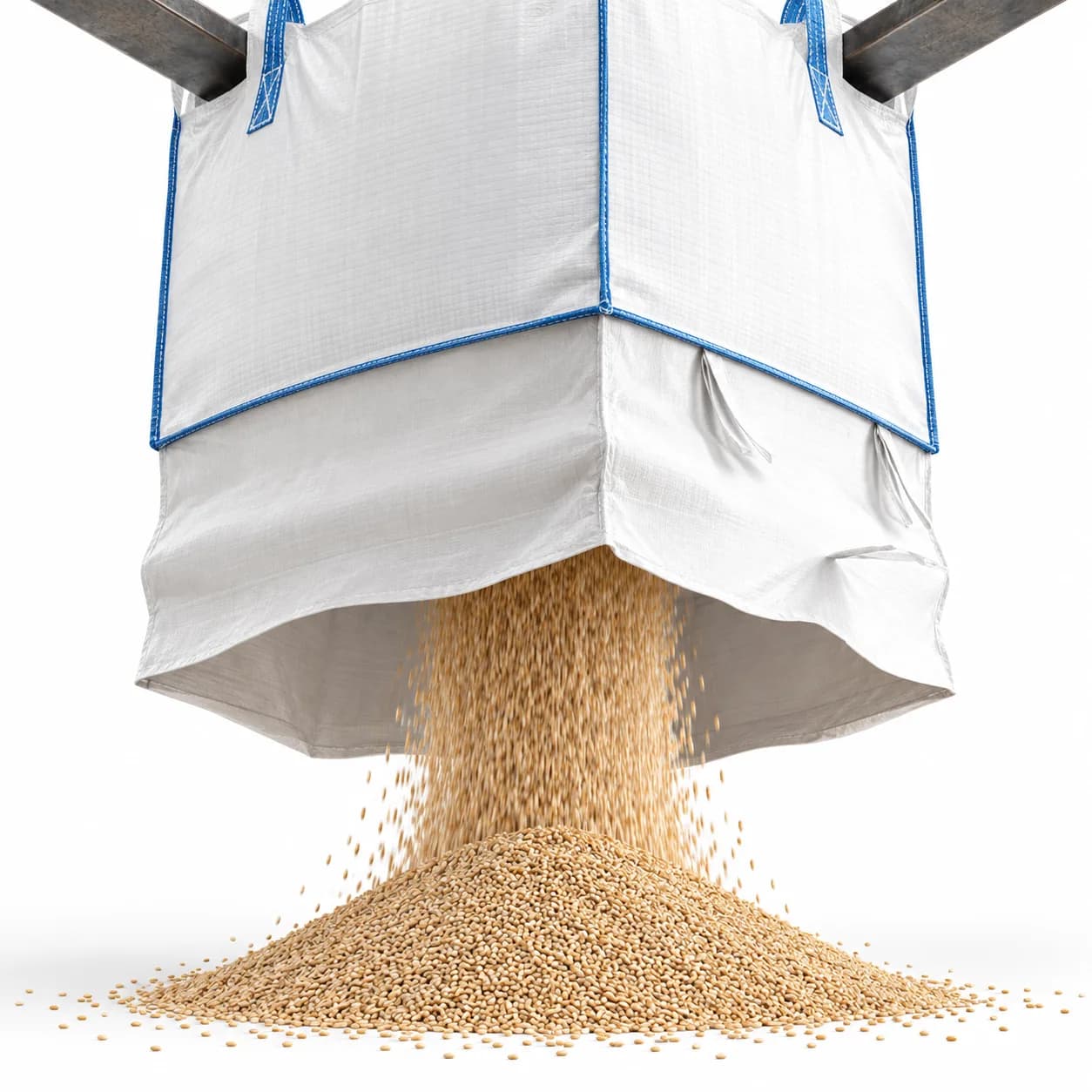
Full bottom discharge
The whole base opens, for material that will not flow through a spout.
Spout protection
A flap, or a petal or iris closure, over the discharge, for when the spout must stay clean in transit.
Conical discharge spout
The base narrows into the spout, which helps product that is slow to flow empty completely. Specified to your equipment.
Add-ons
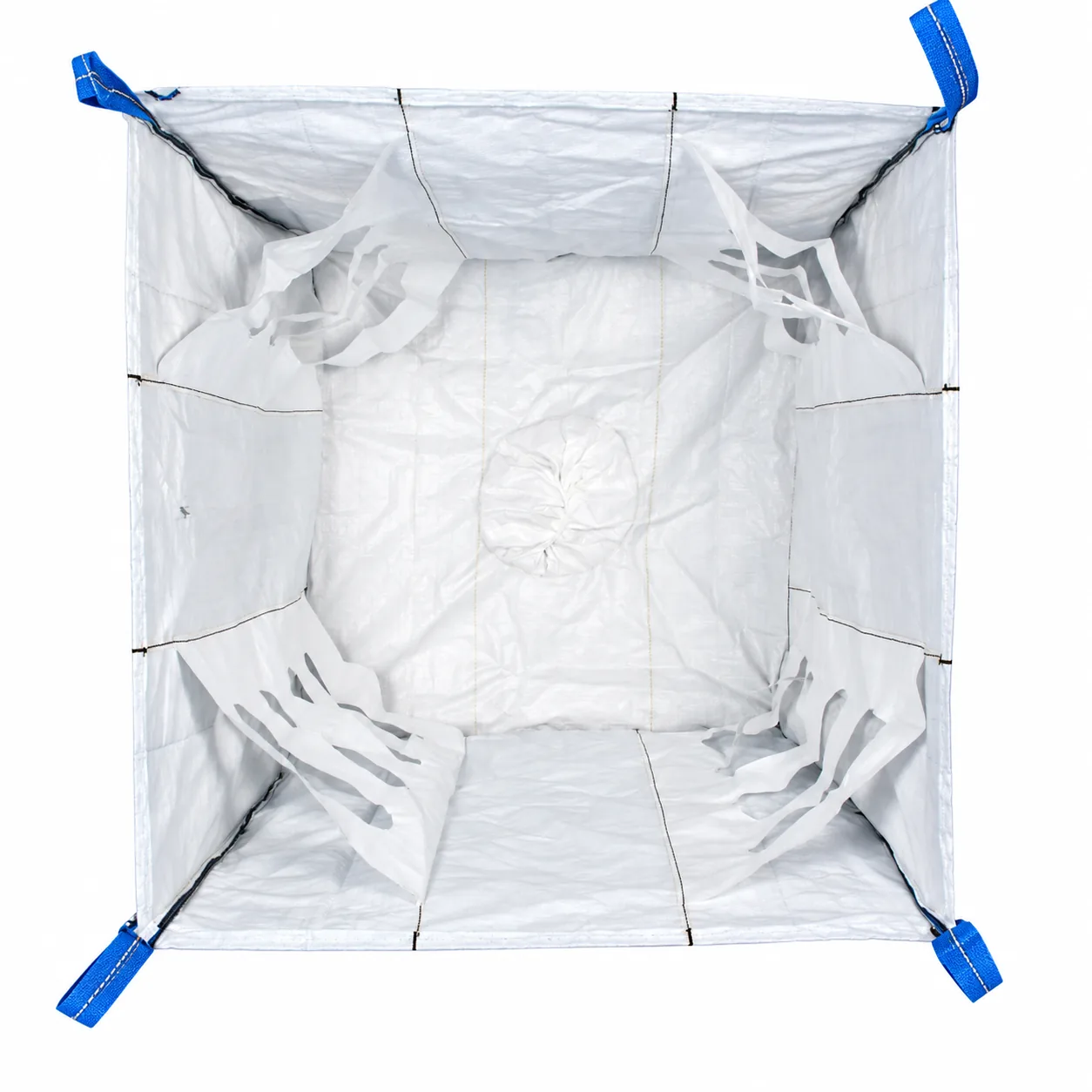
Baffles
Corner panels that hold a cube instead of a bulge: roughly 25 to 30% more volume in the same footprint, and it stacks safely.
Sift-proof seams
Filler cord sewn into the seam, for product fine enough to work through the stitching.
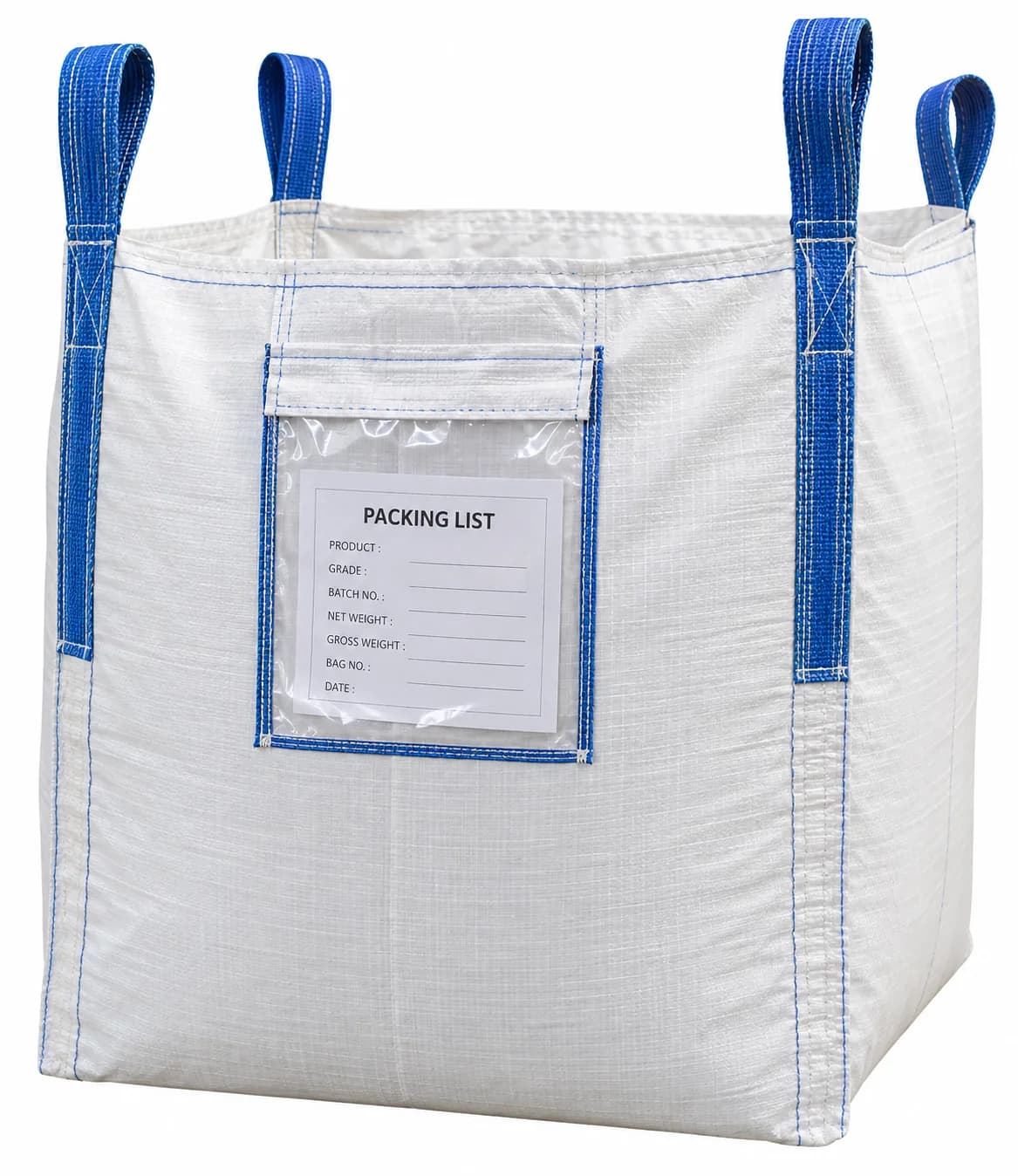
Document pouch
A sealed pouch for the paperwork which needs to travel with the bag.
Safety bands
A reinforcing band around the top, for added strength at the lift.
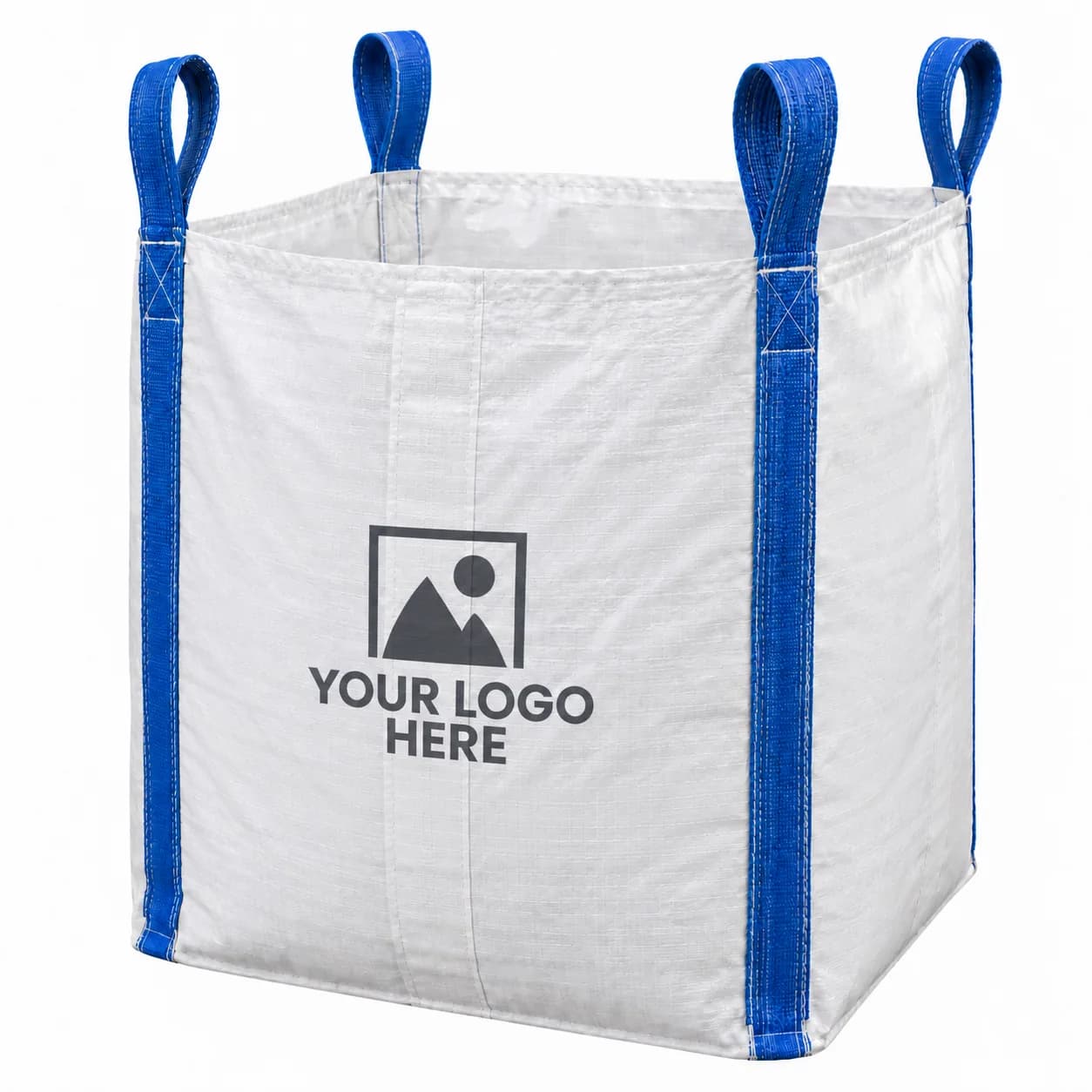
Custom print
Up to four sides, for branding and traceability on the line.
Liner
No liner
Fabric alone, where the product needs no barrier. The cleanest liner is the one you never have to specify.
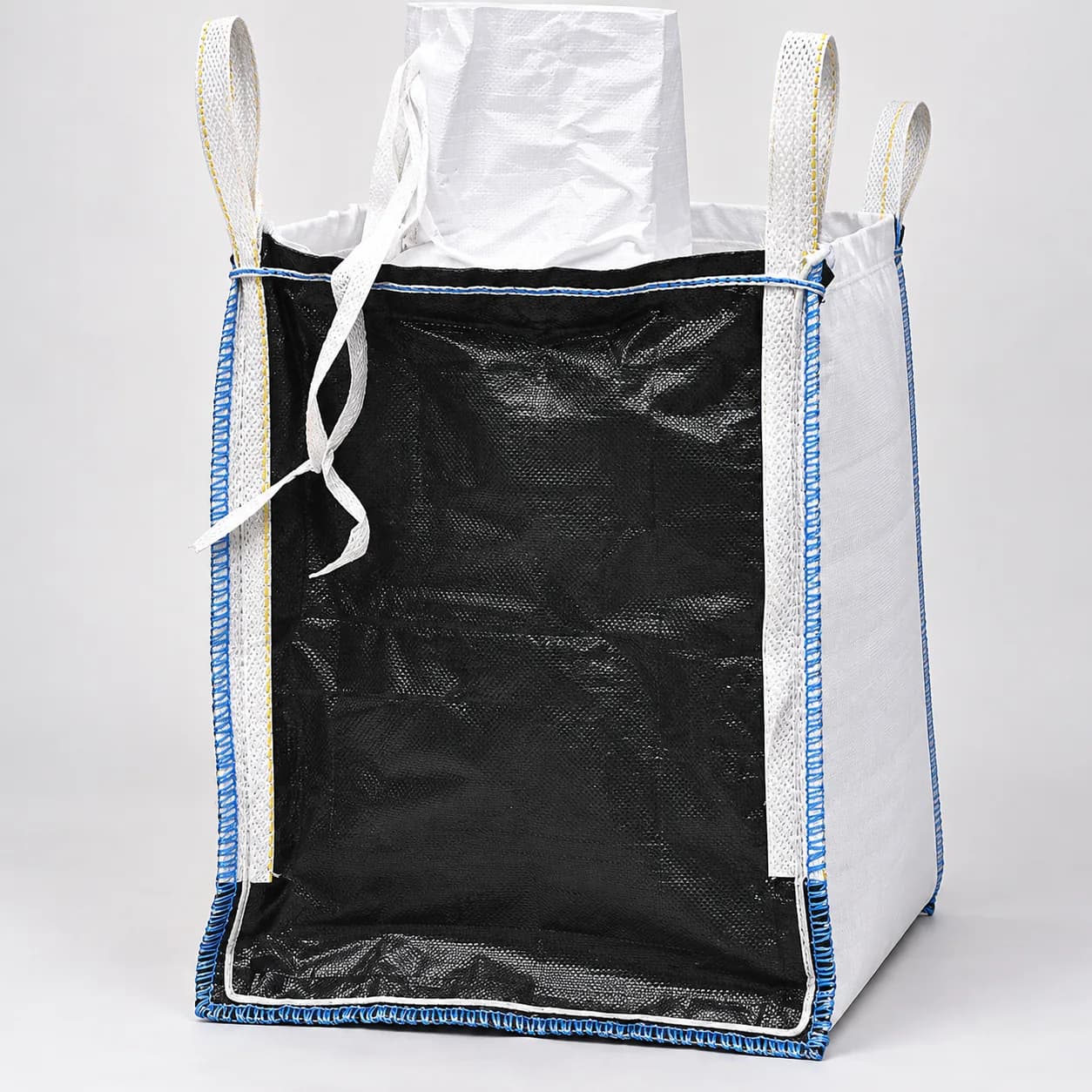
Loose liner
Dropped in, not attached. Affordable insurance against fine powder finding the seams.
Glued-in liner
Bonded to the bag so it stays in place through filling and discharge, which is what a food or pharmaceutical audit expects to see.
Antistatic liner
Specify this inside a Type C or Type D bag, so the liner carries the same static classification as the fabric.
Foil liner
Designed for product that is filled hot, the foil laminate holds temperatures that would deform a polyethylene liner.
Fabric
Uncoated
Breathable, and the default build.
Coated
A thin polypropylene coat over the weave, for fine powder and moisture resistance.
How the constructions compare
| Construction | Vertical seams | Typical SWL (lb) |
|---|---|---|
| U-Panel | 4 | 2,205–3,000 |
| Four-Panel | 4 | 2,205–3,000 |
| Circular | 0 | 2,205–3,000 |
Load figures are indicative industry ranges shown for comparison. Every bag is made to order, so tell us your fill weight and we will specify to it.
Frequently Asked Questions
Four-panel or baffle?
Four-panel is squarer than U-panel; a baffle bag is squarer still, because internal panels tie the walls together. If cube efficiency is the whole reason you are here, baffle goes further.
Are four seams a contamination risk?
For fine powders, yes. Every seam is a potential sift path. Sift-proof seams or a liner address it, or move to a circular bag with no vertical seams at all.
Related products
U-Panel
One continuous panel forms two sides and the base, so the load is carried by fabric rather than by stitching.
Circular
Woven as a seamless tube, no vertical seams at all, so fine powders have nowhere to sift.
Food Grade
100% virgin polypropylene resin, produced in certified clean room conditions.

Send us the load, not a part number.
Material, fill weight, how you fill and how you discharge. That is enough for us to come back with a specification.